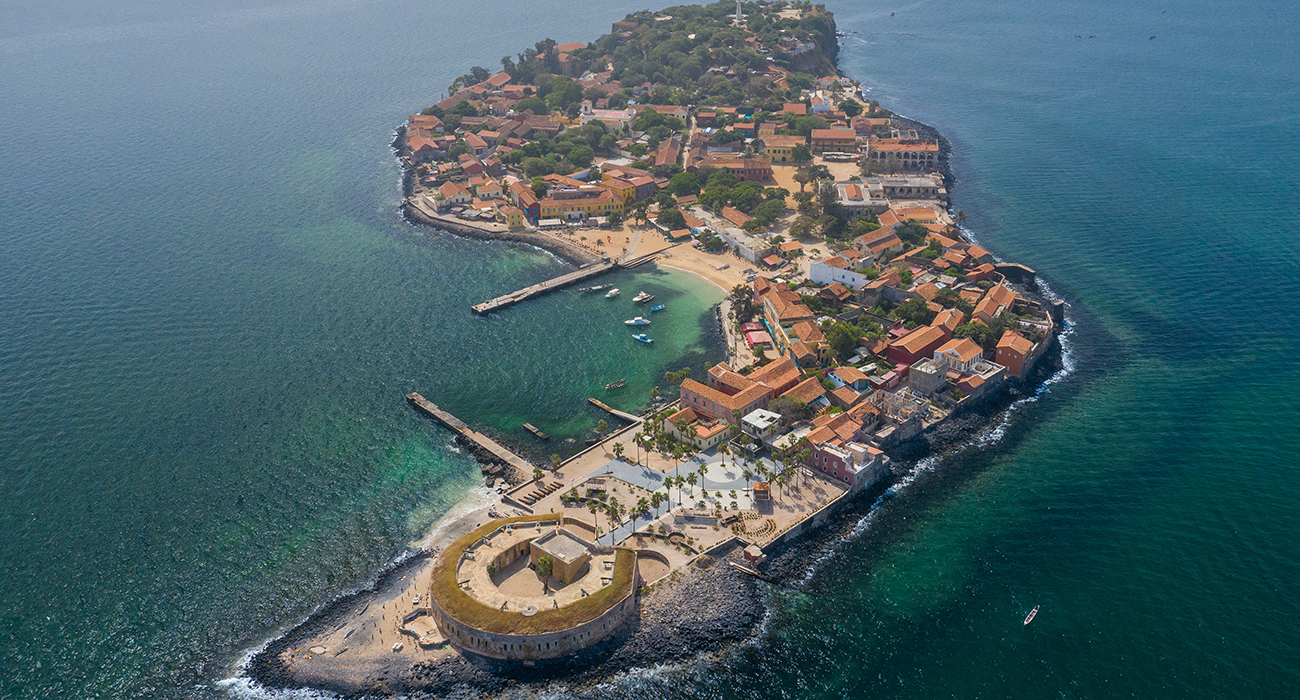
Gorée is unlike any other destination. Located off the coast of Dakar, about a 20-minute boat ride away, this small island is steeped in a painful history linked to the Atlantic slave trade, yet it also offers a gentle way of life characterized by colorful alleyways, gardens, artists’ studios, and sweeping views of the Atlantic. Listed as a UNESCO World Heritage Site, it is a place to be discovered as much with the eyes as with the heart, and deserves the time to walk, reflect, and wander.

Understanding Gorée Before You Set Foot There

Even before disembarking, it’s helpful to know what you’re getting into. For several centuries, Gorée was a strategic point for European powers vying for control of the maritime routes and trading posts along the West African coast. The Portuguese, Dutch, and French succeeded one another there, leaving behind forts, merchants’ houses, and warehouses. Today, the island is both a memorial to the slave trade and a living village, with its residents, schools, markets, and artisans.

This dual identity demands a certain perspective: one does not visit Gorée as a “mere” tourist site. One comes here to understand a chapter of world history, but also to encounter a place that, despite this past, continues to be inhabited, to transform itself, and to welcome visitors and artists.

The House of Slaves: a must-see stop

Most visits begin at the House of Slaves. From the outside, the building, with its symmetrical staircase and colorful walls, resembles the other colonial houses on the island. Inside, however, the atmosphere changes. The guide takes you from cell to cell, explaining the conditions of detention, separated families, and departures into the unknown. Then comes the famous “Door of No Return,” opening directly onto the sea, symbolizing the irreversible break for thousands of enslaved men, women, and children.

Many visitors leave in silence, unable to speak for several minutes. Some choose to sit on a bench right in front of the house, looking out at the horizon and letting the emotion settle. Others prefer to walk alone through the narrow streets to process what they have just heard. It is advisable to arrive relatively early to avoid the crowds, and to keep in mind that this site is прежде of all a place of memory: limited photography, respect for guidelines, and a discreet attitude are expected.

Colorful streets and colonial houses

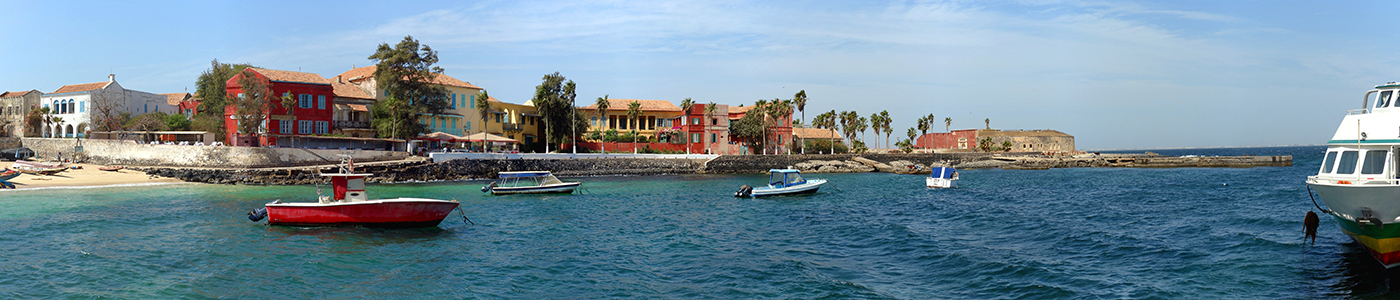
After this powerful moment, you discover a different side of Gorée. The cobbled streets wind between ochre, red, and yellow houses with blue shutters, often covered in bougainvillea. Wooden balconies overhang the streets, half-open doors reveal shaded inner courtyards where laundry dries and children play. It quickly becomes clear why so many photographers and painters have chosen the island as a setting or studio.

In the middle of the day, especially on weekends, the streets can be lively: groups of visitors, souvenir sellers, and students leaving school. But as the boats head back to Dakar, the island regains an almost unreal sense of calm. In the late afternoon, walking without a fixed destination and letting your steps guide you often reveals another atmosphere: that of an island village living at its own pace, far from the noise of the capital.

Fortifications, viewpoints and Atlantic views

From a slightly higher vantage point, Gorée reveals itself in a different light. The walk up to the Castel, the highest point on the island, follows a gradually rising path between stone walls, small gardens, and intermediate viewpoints. Once at the top, the view opens up completely: the bay of Dakar, colorful rooftops, cliffs, and the Atlantic stretching as far as the eye can see. On clear days, the silhouette of the capital is clearly visible in the distance.

Along the way, you may pass old military structures, remnants of forts built to protect the island. Some areas host temporary exhibitions or historical museum displays, depending on the period. Climbing up to the Castel in the late afternoon often offers the best light, especially for photography or simply for enjoying the sun setting over the sea.

Art, crafts and cultural life

Gorée has long been a refuge for artists. In the narrow streets, you quickly notice small galleries, sand painting workshops, courtyards where canvases are drying, and stalls selling jewelry, sculptures, and batik fabrics. You can stop to watch a painter at work, talk with a sculptor, and hear the stories of those who chose to settle on the island in search of a different creative environment.

Some places function as true cultural centers, hosting artist residencies, exhibitions, workshops, and occasional concerts. It sometimes happens that visitors, after a very “historical” first visit to Gorée, return months or years later specifically to attend a cultural event or spend time with artist friends living there. The island then becomes less a travel memory and more a place of life.

Beach, coves and moments by the water

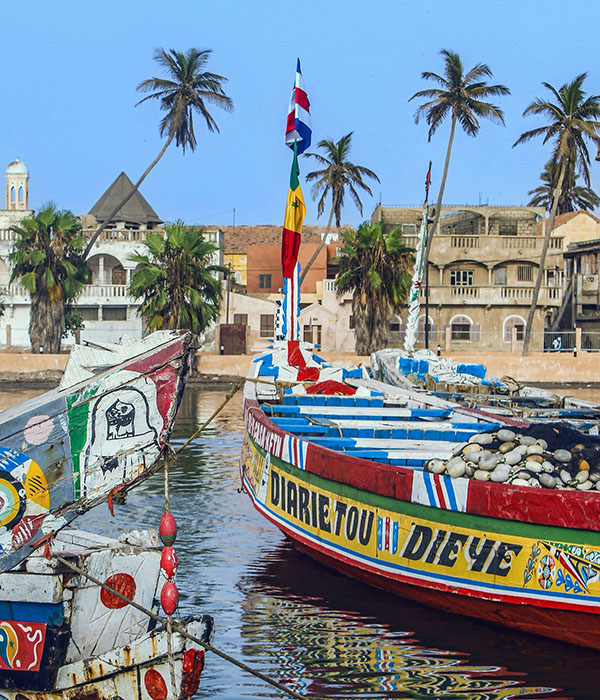
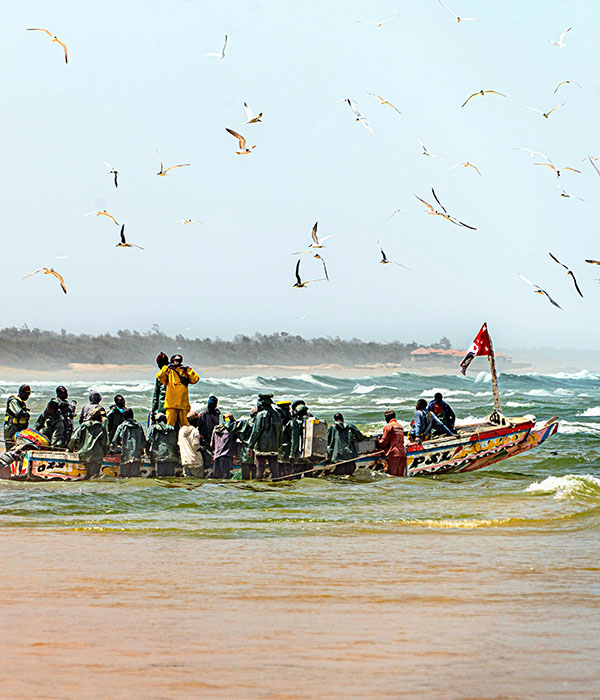
Even with its heavy history, Gorée is still an island. Right next to the landing pier, a small beach allows swimming, watching pirogues, and seeing young people diving, swimming, and playing ball in the water. Visitors mix with locals in a lively atmosphere, especially in the late afternoon.

Further along, a few coves and rocky spots offer quieter places to sit facing the Atlantic. Some choose to settle there with a book, a notebook, or simply their thoughts. This is where Gorée’s uniqueness becomes most apparent: a place where a very heavy past and a gentle everyday life coexist. It is important to keep this contrast in mind, especially if you choose to swim or have a picnic after visiting the House of Slaves.

A day or half a day: planning your visit

For those with limited time, a well-organized half-day is enough to see the essentials. You take the boat in the morning from the port of Dakar, start with the House of Slaves, then continue with a walk through the narrow streets, a coffee or juice in a small square, and return early in the afternoon. This is what many transit or business travelers do when fitting Gorée into a busy schedule.

If you can afford it, a full day makes all the difference. You take an earlier boat, visit the House of Slaves and possibly another museum, then have lunch on a terrace overlooking the sea. In the afternoon, you take time to explore the workshops, climb up to the Castel, sit on the beach or in a courtyard. You return on the last or one of the last boats, as the lights of Dakar begin to sparkle. This slower pace is often the one people remember most.

Practical tips for Gorée

A few practical points make the visit easier. Boats to the island depart regularly from the port of Dakar, but it is advisable to arrive a bit early to buy your ticket and go through security checks. You will need to present an ID, pay for your ticket, and sometimes a small landing fee. Payment is usually in cash, so it is recommended to carry some change.

On the island, the streets are cobbled and sometimes sloped, so comfortable shoes are recommended. A hat, sunscreen, and a bottle of water are also useful, especially during the hot season. Finally, it is important to remember that Gorée is a living village: people sleep, study, and work here. Asking permission before photographing individuals, remaining discreet in places of worship or memory, and avoiding overly revealing clothing in certain areas are all appreciated signs of respect.

Anecdotes: three ways to experience Gorée

A first traveler arrives in Gorée with a very tight schedule. He planned to “do” the House of Slaves in an hour, then move on to viewpoints and the beach. After the guided tour, he ends up sitting for a long time on a low wall facing the sea, unable to take out his phone or camera. The rest of the day turns out much slower than expected: a quiet walk through the streets, a simple lunch, and a return to Dakar in the late afternoon, with the feeling of carrying something more than just a list of places visited.

A woman from Dakar, on the other hand, comes to Gorée regularly. She has already visited the museums and knows the streets by heart. When she crosses over now, it is to enjoy a day of rest: an early morning swim as the island slowly wakes up, a book in the shade of a courtyard, a late lunch on a terrace, a nap, and then a return on the last boat. For her, Gorée has become more of a refuge than a tourist site.

A photographer finally decides to spend a full week on the island. Each day, he takes the first boat and chooses a different light: misty morning, harsh midday sun, golden late afternoon. He identifies a façade, a street corner, a balcony where the light falls in a unique way. By returning again and again, he eventually gets to know the residents, the women selling fritters, the children leaving school. His images, later on, will tell as much about this closeness as about the beauty of the streets.

FAQ – What to see in Gorée?

How much time should you plan to visit Gorée? To see the essentials – the House of Slaves and a walk through the village – half a day is enough. A full day allows you to add a museum, a climb up to the Castel, time in artists’ workshops, and moments of relaxation on a terrace or the beach.

Is the House of Slaves suitable for children? It depends on their age and sensitivity. The visit deals with difficult themes. For younger children, it may be helpful to prepare them in advance with simple explanations, stay attentive to their reactions, and plan time to talk afterwards.

Can you swim in Gorée? Yes, mainly on the beach near the landing pier and in some supervised areas. However, caution is needed (waves, rocks, changing seabed conditions), and children must always be closely supervised. Swimming can be enjoyable, but it should not overshadow the island’s memorial significance.

Is Gorée accessible for people who have difficulty walking? The streets are cobbled and some parts of the island are steep. The village center is generally accessible with breaks and good walking shoes, but reaching higher areas (Castel, certain viewpoints) can be more difficult. It is better to adapt your itinerary accordingly.

Do you really need a guide to visit Gorée? You can walk around the streets on your own, but a local guide, especially for the House of Slaves and other historical buildings, provides valuable context. Many visitors choose a compromise: a guided visit for the historical part, followed by free time to explore and experience the island at their own pace.