
Senegal offers a wide range of experiences, from nature and culture to spirituality, beach vacations, and accessible safaris. You’ll travel through savannas, deltas, mangroves, and dunes, as well as colonial towns and fishing villages—and everywhere you go, you’ll find the same constant: striking landscapes and inhabited places that are rarely mere backdrops.
Landscapes, flora, and fauna
The country unfolds a wide range of landscapes, from the savannas and plateaus of the central and eastern regions to the mangroves of the Sine-Saloum and Casamance, passing through the dunes and Sahelian zones of the north. The Atlantic coast alternates between long beaches, cliffs, lagoons, and peninsulas, offering numerous viewpoints over the ocean. Its emblematic flora includes isolated baobabs scattered across the bush, mangrove mangroves, filaos planted as windbreaks along some beaches, Casamance palm trees, and crops of peanuts, millet, and rice in agricultural areas.
Wildlife is mainly concentrated in national parks and reserves: antelopes, buffaloes, warthogs, monkeys, giraffes, reintroduced rhinoceroses, and more discreetly, wild felines and canids, along with crocodiles and hippopotamuses in certain wetlands. The country is also a hotspot for birdlife: Djoudj, Saloum, and Casamance host pelicans, cormorants, herons, flamingos, and millions of migratory birds during the dry season, making Senegal one of the leading birdwatching destinations in West Africa.
Bandia and Fathala Reserves
The Bandia Reserve, located between Dakar and the Petite Côte, is often cited as the ideal gateway to a “Senegalese-style safari.” Visitors travel by 4x4 with a guide through baobab trees and wooded savanna to observe giraffes, zebras, Derby elands, oryx, buffalo, monkeys, ostriches, rhinos, and numerous birds. The relatively short trails and easy access from coastal areas make it a popular outing for families and short-stay travelers.
Further south of Saloum, the Fathala Reserve offers a more forested and expansive environment, home to large mammals, numerous primates, antelopes, and a notable avifauna. Guided safaris in observation vehicles, nature walks, and specific activities (such as rare animal spotting and birdwatching) round out the offerings.
Niokolo-Koba and Djoudj Parks
Niokolo-Koba National Park, in the east, is one of the largest parks in West Africa, with nearly 900,000 hectares designated as a UNESCO World Heritage Site. Wooded savannas, gallery forests along the rivers, floodplains, and cliffs are home to antelopes, buffalo, hippos, crocodiles, monkeys, a rich variety of birds, and—though rarer to spot—lions, leopards, and wild dogs. Access requires thorough preparation: choosing the right season (the dry season is better for trails and wildlife viewing), bush lodges, and 4x4 vehicles with certified guides.
To the north, the Djoudj National Bird Sanctuary, in the Senegal River Delta, is considered the world’s third-largest bird sanctuary, hosting up to three million birds annually between November and April. Spectacular colonies of pelicans, cormorants, ducks, herons, waders, and raptors can be observed by boat and by vehicle in a landscape of marshes, channels, and water bodies.
Dindéfélo Waterfalls
The Dindéfélo Waterfalls, near Kédougou, are among the most spectacular natural sites in the country. A tall waterfall plunges into a deep basin at the end of a shaded trail that passes through vegetation denser than in most other parts of Senegal. Swimming is often possible in the pool, depending on the season and local guidelines, offering a rare moment of coolness after the hike. Around the area, visitors can hike in the surrounding hills, visit Fulani or Bassari villages, and discover a “mountainous” side of Senegal that strongly contrasts with the coast and the savanna.
Pink Lake
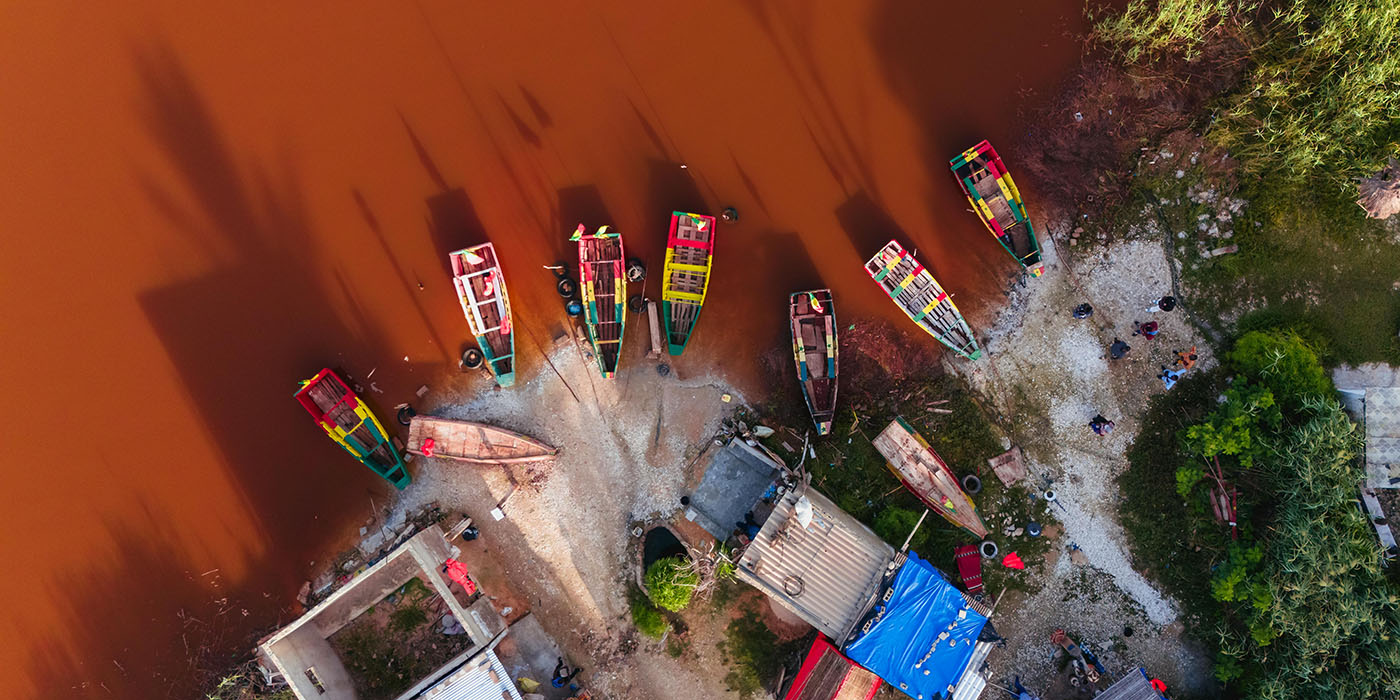
Lake Retba, better known as the Pink Lake, is famous for its pinkish hues, which appear depending on light, season, and salt concentration. Salt extraction is still very active: the silhouettes of workers, boats loaded with crystals, and wind-shaped salt piles form the main human element of the landscape. Visits include pirogue rides, 4x4 tours around the lake, quad biking or car excursions, as well as walks across the salt flats and dunes leading to the nearby Atlantic beach. It is a classic day trip from Dakar or the Petite Côte, often combined with a visit to the dunes or the coast.
Beaches
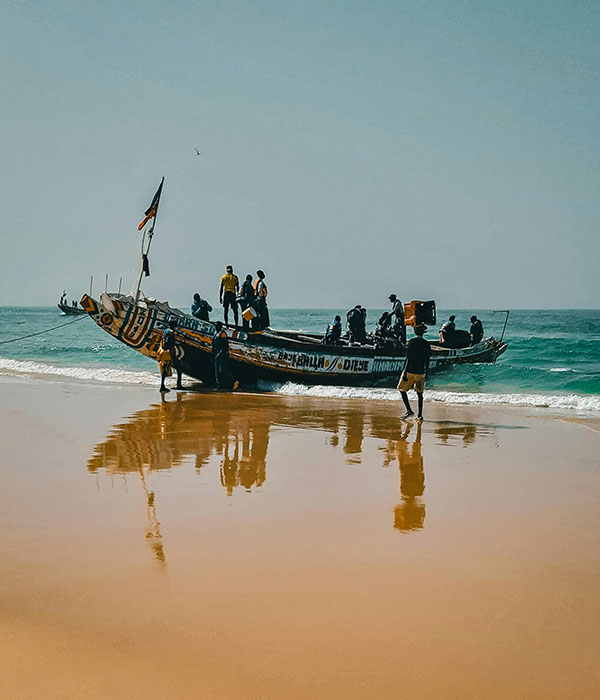
Senegal’s beaches offer a wide range of atmospheres. Around Dakar, Yoff stretches over several kilometers of sand where fishing pirogues, surfers, families, and street vendors all mix together; Ngor, facing the island of the same name, combines a fishing village, waves, and lively terraces; some coves along the western Corniche offer smaller, more intimate spots.
Along the Petite Côte, Toubab Dialaw and Popenguine stand out for their cliffs and wilder coves, Somone for its lagoon, and Saly, Ngaparou, and Mbour for more developed beaches lined with hotels, clubs, and restaurants. In Casamance, Cap Skirring, Kafountine, and nearby beaches stretch out long sandy shores bordered by coconut trees, with a more tropical and relaxed atmosphere. Everywhere, swimming, relaxation, walks, encounters with fishermen, and water sports shape the rhythm of the day.
Islands
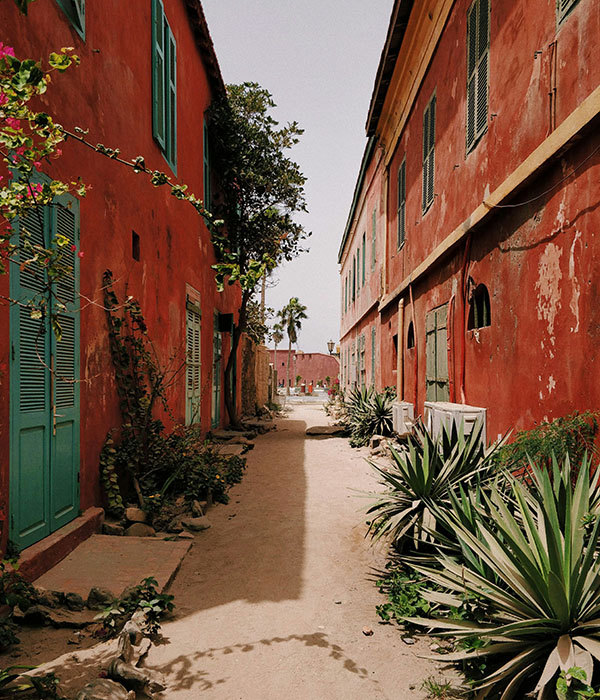
Islands play a central role in a trip to Senegal. Gorée Island, a UNESCO World Heritage site, remains a major place of memory linked to the transatlantic slave trade while still retaining the feel of an island village: pastel-colored streets, colonial houses, the House of Slaves, museums, artist workshops, and small beaches. Ngor Island, just off the coast of Dakar, can be reached in a few minutes by pirogue and offers beaches, restaurants, accommodations, and surf spots just steps away from the city.
The islands of the Sine-Saloum (Mar Lodj, shell islands, mangrove islets) and Casamance (Carabane, bolong islets) are best explored by pirogue: villages on stilts or shell banks, waterside camps, mangrove walks, and sunsets over the bolongs. These islands, less densely built than those around Dakar, are more inviting for nature stays and everyday encounters with local communities.
Places of worship and spirituality
Places of worship reflect the country’s strong spiritual dimension. In Dakar, the Grand Mosque and the African Remembrance Cathedral are two major architectural landmarks visible from the city center. The Mosque of the Divinity, perched on the western Corniche, overlooks the ocean and offers a spectacular view of the coastline. The Massalikoul Djinane Mosque, one of the largest in West Africa, has become a major center of the Mouride brotherhood in an urban setting.
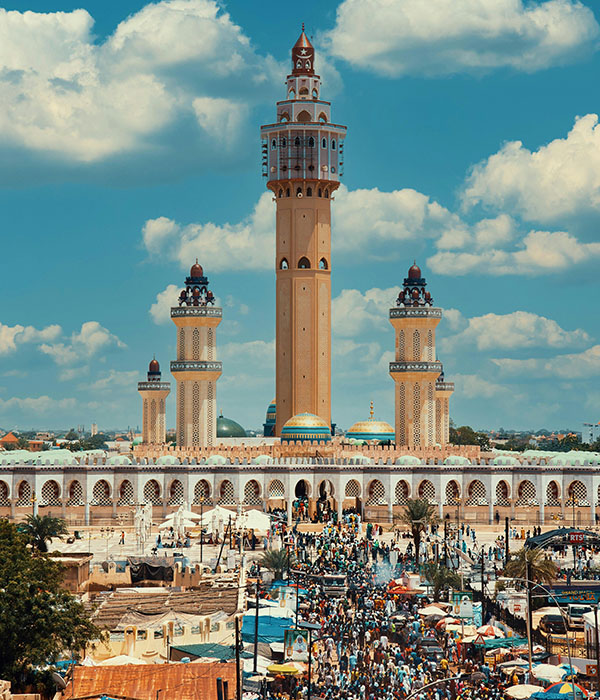
Outside the capital, the Great Mosque of Touba is the heart of the Mouride holy city and one of the largest religious complexes on the continent, serving as the center of the Grand Magal, a pilgrimage that gathers millions of worshippers every year. In Popenguine, the Marian sanctuary and the chapel overlooking the sea host an important Catholic pilgrimage and offer a remarkable viewpoint over the coast.
Regions and cities
The country can also be understood through its major regions. Dakar concentrates the oceanfront metropolis, corniches, markets, museums, galleries, nearby islands, and nightlife. The Petite Côte forms a coastal resort area with beaches, cliffs, lagoons, nearby reserves, and fishing villages. The Sine-Saloum is the realm of deltas, mangroves, and Serer villages, an excellent area for birdwatching.
In the north, the Senegal River Valley around Saint-Louis, Djoudj, and the Langue de Barbarie offers Sahelian landscapes, historic towns, and wetlands. In the east, eastern Senegal includes Niokolo-Koba, Kédougou, Dindéfélo, and the Bassari and Fulani lands, with hills, bushland, and rural culture. Finally, Casamance—Ziguinchor, Oussouye, Cap Skirring, islands, and Diola villages—combines rice fields, forests, bolongs, and beaches in an area often considered one of the country’s most captivating regions.
Dakar, Saint-Louis, and Ziguinchor structure logistics and discovery routes. Dakar concentrates museums, markets, nightlife, and access to nearby islands; Saint-Louis, a colonial river city, serves as a gateway to the northern parks; Ziguinchor, the main city of Casamance, acts as a base for southern villages and beaches.
Monument of the African Renaissance and major museums
The Monument of the African Renaissance, standing on one of the Mamelles hills in Dakar, rises over 50 meters and depicts a family facing the ocean. It can be reached via a long exterior staircase or an internal elevator leading to a viewing platform, offering a panoramic view of the city, the coastline, and the Atlantic—particularly spectacular at the end of the day.
The Museum of Black Civilizations, inaugurated in Dakar, offers a broad showcase of African and diasporic cultures, combining archaeology, traditional arts, contemporary art, science, and spirituality. The Théodore Monod Museum (IFAN) presents masks, statues, ritual objects, and textiles from West Africa; the Henriette Bathily Women’s Museum highlights the stories and creations of Senegalese and African women. Galleries, the Village des Arts, and cultural centers complete this offering, making Dakar a major artistic hub in West Africa.
Sport and active lifestyle
Senegalese wrestling is the country’s iconic sport and spectacle: matches, held in dedicated arenas or neighborhood fields, combine music, dance, rituals, financial stakes, and intense public enthusiasm. Football is also omnipresent, from sandy pitches to large stadiums, and the national team’s recent successes have further strengthened this passion.
Along the coast, surfing, bodyboarding, kitesurfing, kayaking, light sailing, and sometimes diving or snorkeling are available in Dakar, Ngor, Yoff, the Almadies, and parts of the Petite Côte. Hiking, jogging, mountain biking, and horseback riding complete the offer, especially in more rugged regions like Kédougou or along the corniches and beaches.
Practical advice
To make the most of everything to see, it is helpful to adapt your itinerary to the season and available time. The dry season, from November to April, is more favorable for parks, road travel, and birdwatching; the rainy season, from July to October, enhances certain landscapes but can make some tracks more difficult and some areas wetter.
In terms of transport, it is best to stick to main roads, avoid intercity travel at night, choose reputable bus companies or private transfers for long distances, and always use official taxis while agreeing on the fare before getting in. For more remote areas (Niokolo-Koba, eastern Senegal, parts of Casamance), it is advisable to follow official guidance and travel with reputable agencies or guides.
Regarding health and safety, checking vaccinations, learning about malaria prevention, using insect repellent and mosquito nets, drinking safe water, protecting yourself from the sun, and keeping valuables discreet are essential precautions. A local SIM card, offline maps, and a few apps (ridesharing, translation, messaging) make travel easier and help manage unexpected situations.
Traveler anecdotes
A visitor recalls that at the Pink Lake, he came to “see the pink water” and take photos. The color that day was subtle, almost disappointing; what remained as the real highlight of the day was his conversation with a salt worker who explained how the lake had changed since his childhood.
At Djoudj, another traveler remembers less the number of birds than the moment when, in the middle of a pelican colony, the guide cut the boat engine: for a few minutes, only the flapping wings and the water rippling could be heard, giving the scene an almost unreal quality.
In the streets of Gorée, a tourist explains that he was more moved by a small inner courtyard where children were laughing under a bougainvillea than by the most photographed façades: “You could feel both the weight of history and life continuing, without any staged setting,” he writes.
And in Dindéfélo, a hiker sums up his day: “I came to see a waterfall, I’m leaving with voices. The voices of the children who guided me along the trail, the guide who told me the village myths, and the sound of the water covering everything else.”
FAQ – What to see in Senegal?
What are the “must-see classics” for a first trip? Dakar and its corniches, Gorée Island, the Pink Lake, one or two beach stops on the Petite Côte, a pirogue trip in the Sine-Saloum, and if possible Saint-Louis with an excursion to Djoudj or a wildlife reserve (Bandia or Fathala).
Where can you easily see animals? Bandia and Fathala reserves are the most accessible for day safaris from Dakar or the Petite Côte. For a more “bush” experience, Niokolo-Koba National Park is ideal, but it requires more time, budget, and preparation.
Where is the best place for birdwatching? Djoudj National Bird Sanctuary, north of Saint-Louis, is one of the best birdwatching sites in West Africa, especially between November and March. The Sine-Saloum and Casamance deltas also offer excellent observation spots in mangroves and bolongs.
Where can you find the best beaches? The Petite Côte (Somone, Popenguine, Toubab Dialaw, Saly, Ngaparou, etc.) and Casamance (Cap Skirring and surrounding areas) offer some of the most popular beaches, easy to combine with other visits. Around Dakar, Yoff, Ngor, and some Corniche coves are also very popular.
Which islands are must-sees? Gorée for history and its streets, Ngor for beaches, surfing, and restaurants, the Îles de la Madeleine for their natural setting, and in the deltas, some Sine-Saloum and Casamance islands for nature-based stays in eco-camps.
How should you include places of worship in an itinerary? In Dakar, plan visits to the Grand Mosque, Massalikoul Djinane, the Mosque of the Divinity, and the African Remembrance Cathedral. On the Petite Côte, the Popenguine sanctuary fits well into a day trip. For a more spiritual journey, a stop in Touba, the Mouride holy city, is essential, while respecting dress codes and religious guidelines.
How much time should you plan at minimum? In 7 to 10 days, you can combine Dakar, Gorée, the Pink Lake or Bandia, and a beach area (Petite Côte or Sine-Saloum). In 2 to 3 weeks, you can also add Saint-Louis, Djoudj, Casamance, or an excursion to Niokolo-Koba and Dindéfélo.