
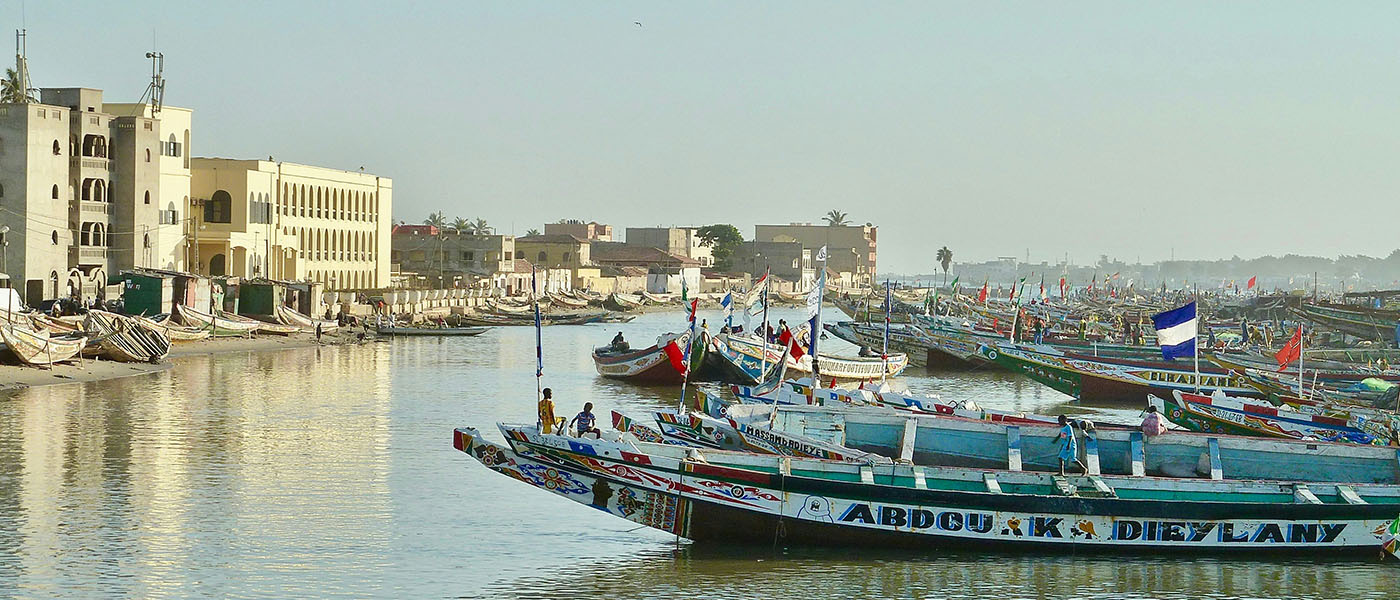
In Senegal, the question “What to do?” never has just one answer. In a matter of days, you can go from a contemporary art museum to a quiet mangrove forest, from a fishing village to a desert of sand dunes, from an mbalax concert to a night camping in the Sine-Saloum, all without leaving the same country. The challenge isn’t to do everything, but to find the right balance between city, coastline, deltas, bush, and encounters.
Diving in Dakar and its islands
In Dakar, the first thing to do is often… to walk. The Plateau and the Medina are a mix of markets (Kermel, Sandaga, Soumbédioune), colonial buildings, street art, cafés, bookstores, and cultural centers, while the Corniche offers a succession of views of the Atlantic, amid joggers, tea vendors, and oceanfront terraces. The Monument of the African Renaissance, the Mosque of the Divinity, Hann Park, and the Museum of Black Civilizations are among the most frequently mentioned spots for a first immersion in the capital.
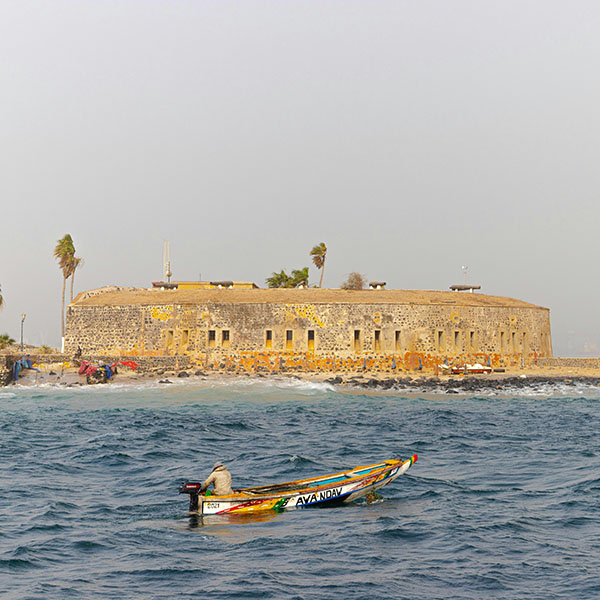
Offshore, Gorée Island remains a must-see for understanding the history of the slave trade and colonization, but also for enjoying its colorful alleyways, artists’ studios, and small beaches. Further north, Ngor Island offers a seaside getaway just minutes from the city: swimming, surfing, beach restaurants, and village streets. The Madeleine Islands, designated a national park, complete the natural picture with their cliffs, birds, and deep waters, accessible via day trips.
Explore the Petite Côte: beaches, villages, and easy safaris
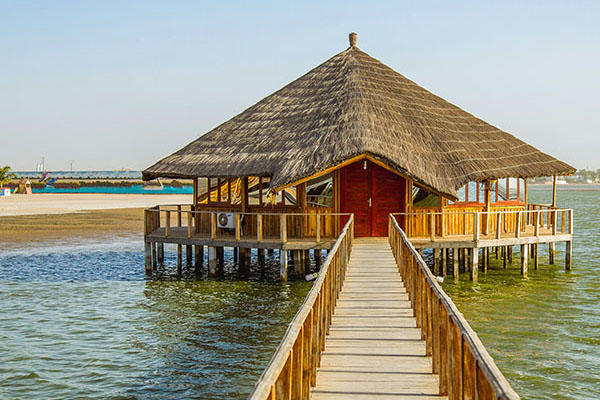
Just south of Dakar, the Petite Côte is the perfect destination for beach lovers and those seeking relaxation. Saly and Mbour offer hotels, clubs, beach restaurants, and water sports; Somone is renowned for its sheltered lagoon and canoe trips; Popenguine and Toubab Dialaw charm visitors with their cliffs, coves, quaint villages, and artistic projects. A typical day: swimming, a walk on the sand, a lunch of grilled fish, a visit to the market, and a trip out to sea or to the lagoon.
Not far from there, the Bandia Reserve is one of the most popular destinations for a first safari: on a guided 4x4 tour, you can spot giraffes, zebras, rhinos, oryx, wildebeests, monkeys, ostriches, and a multitude of birds amidst the baobab trees. Further south, toward the Gambian border, the Fathala Reserve offers a denser savanna atmosphere, with buffalo, antelopes, monkeys, warthogs, and abundant birdlife.
Sine-Saloum: Deltas, Mangroves, and Life Along the Water
Sine-Saloum deserves a chapter of its own. This vast delta of bolongs and mangroves, classified as a biosphere reserve, can be explored by pirogue, kayak, or on foot from villages and camps located along the shores or on the islands. People come for the landscapes — sea channels, mangrove trees, sandbanks, and birds — and stay for the atmosphere: shared meals, evenings filled with percussion music, and conversations on the terrace while watching the sun set over the water.
Activities revolve around boating (pirogue rides, traditional fishing, birdwatching), visits to Serer villages, walks through coconut groves or salt flats, and nights in camps or ecolodges where the silence is broken only by bird calls and the passing of pirogues.
Heading North: Saint-Louis, Djoudj, and Lompoul
In the north, Saint-Louis is one of the most obvious answers to the question “what to do in Senegal?”. The former colonial capital, set on an island in the Senegal River, charms visitors with its colorful houses, wrought-iron balconies, bridges, horse-drawn carriages, and lively neighborhoods between Guet N’Dar (the fishermen’s district), the historic island, and Sor on the opposite bank. Visitors stroll through the streets, explore museums and galleries, stop at old cafés, and watch life unfold along the river.
The Djoudj National Bird Sanctuary, listed as a UNESCO World Heritage Site, is located nearby. A major stopover for migratory birds between November and April, it can be visited by pirogue or boat among pelicans, flamingos, cormorants, and many other species. Between Saint-Louis and the Petite Côte, the Lompoul Desert changes the scenery completely: ochre dunes, nights in tents or ecolodges, camel or 4x4 excursions, and star-filled skies far from the city lights.
Casamance: Rice Fields, Bolongs, and Long Beaches
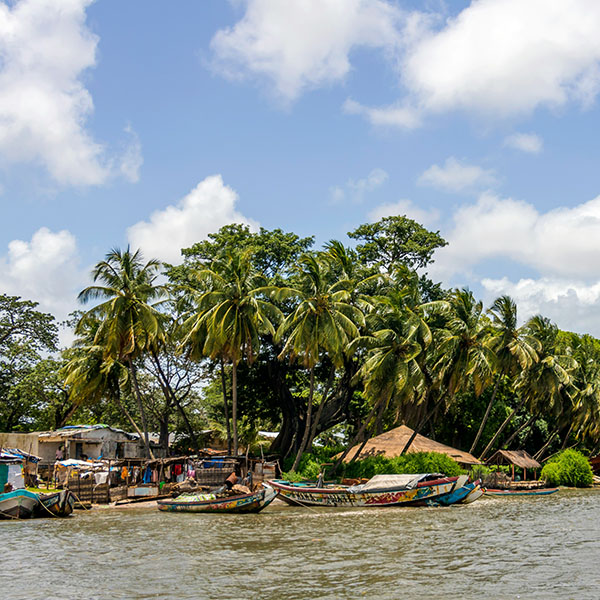
Casamance, in the south of the country, is often described as the “garden of Senegal.” Around Ziguinchor, Cap Skirring, Carabane Island, Elinkine, and Oussouye, the region combines rice fields, giant kapok trees, Diola villages, bolongs, colorful markets, and long beaches lined with coconut palms. Visitors alternate between pirogue rides, beach days, village visits, weekly markets, and evenings in camps along the river or the sea.
The atmosphere here is more tropical and greener, with a pace often perceived as slower than around Dakar. Casamance is ideal for “hub-style” stays: travelers settle in a village or camp and then explore the surrounding areas by pirogue or bush taxi.
Eastern Senegal: Parks, Mountains, and Villages
In the east, Eastern Senegal reveals a wilder and less-visited side of the country. Around Tambacounda, Niokolo-Koba National Park, Kédougou, and the Dindéfélo waterfalls, the landscape is made up of savannas, gallery forests, hills, and rocky plateaus.
Niokolo-Koba, a UNESCO World Heritage Site, is the country’s largest national park. On guided safaris, visitors can spot antelopes, buffaloes, warthogs, monkeys, hippos, crocodiles, and abundant birdlife, and occasionally large predators. Around Kédougou and Dindéfélo, travelers come for hikes to waterfalls, river swimming, and encounters with Bassari and Bedik communities. Altogether, the region offers a trekking and wilderness atmosphere that is very different from the coastline.
Experiencing the Culture: Music, Gastronomy, Art, and Sports
Beyond the landscapes, the question “what to do in Senegal?” also means “what to experience?”. Attending a mbalax concert or a night out in a Dakar club, exploring the craft markets of Soumbédioune, Mbour, or Ziguinchor, tasting a thiéboudienne in a small local eatery, taking a guided tour of museums (Museum of Black Civilizations, IFAN, House of Slaves), or joining a cooking, percussion, or dance workshop are experiences frequently mentioned in travel stories.
On the beaches and in neighborhood stadiums, Senegalese wrestling and football complete the cultural picture. Watching a wrestling match in an arena or a local football tournament allows visitors to feel the popular excitement, songs, percussion rhythms, and pre-match rituals of the wrestlers. Taking a surf lesson in Ngor or Les Almadies, jogging along the Corniche at sunset, or accompanying a guide to buy ingredients for a yassa dish at the market are all ways to connect with everyday life in Senegal.
Practical Tips
To enjoy this diversity without exhausting yourself, it is better to focus on a few major regions rather than trying to see everything at once. For a short trip (7–10 days), combining Dakar–Gorée, the Petite Côte, and either Sine-Saloum or Saint-Louis already makes for a rich itinerary. With two weeks or more, Casamance or Eastern Senegal become realistic additions.
When it comes to transportation, combining taxis or ride-hailing services in cities, bush taxis or buses for long-distance routes, pirogues for the deltas, and sometimes domestic flights or ferries for Casamance allows travelers to adapt to each region. Avoiding night travel on isolated roads, checking actual ferry and pirogue schedules, and always leaving some flexibility in your itinerary for unexpected changes will make the trip smoother and less stressful.
In terms of health and safety, checking your vaccinations, seeking advice about malaria prevention, using insect repellent and mosquito nets, drinking safe water, protecting yourself from the sun, and staying discreet with valuables are essential precautions. Buying a local SIM card, downloading offline maps, and using ride-hailing and messaging apps also make travel and communication easier.
Finally, embracing the local rhythm — greetings, conversations, delays, and unexpected moments — is often the best way to experience a lot while still feeling unhurried.
Traveler Anecdotes
In Dakar, one traveler recalls going to buy a SIM card at a market and ending up sitting on a plastic stool drinking tea with a vendor, listening to his mbalax playlist, and writing down a list of restaurants, clubs, and beaches the man absolutely wanted him to discover.
In Sine-Saloum, a traveler remembers a sunrise pirogue ride. She had gone out “just to see the birds” but found herself sharing a peaceful silence with the boatman, who would occasionally point out a heron, a pelican, or a village slowly waking up. At the end, he simply told her: “Now you know our morning.”
In Casamance, a couple eventually became part of the ritual of the daily football match after spending several evenings on the same beach. At first, they watched from afar; by the third evening, locals trusted them to watch over the bags, and on the fourth, they were asked to film the goals “for TikTok.”
In Eastern Senegal, a hiker describes the moment when, exhausted while climbing toward the Dindéfélo waterfall, he was overtaken by laughing barefoot village children. One of them started holding his hand during the last few meters, without saying a word, simply helping him across the slippery rocks. “That’s the gesture I talk about most often when I get home,” he says.
FAQ – What to Do in Senegal?
What are the must-do activities for a first trip?
A mix of city life, coastline, and nature: Dakar and Gorée Island, one or two nearby islands (Ngor, Madeleine), a few days on the Petite Côte, a safari excursion (Bandia or Fathala), one or two days exploring Sine-Saloum by pirogue, and, if time allows, a trip to Saint-Louis or Casamance.
How much time is needed to fully enjoy the main activities?
In 10 days, travelers can already combine Dakar–Gorée, the Petite Côte, and either Sine-Saloum or Saint-Louis. With two weeks, it becomes realistic to add Casamance or Eastern Senegal. Beyond that, visitors can spend more time in each region, multiply excursions, and enjoy a slower, more immersive experience.
Is Senegal a good destination for nature lovers?
Yes. The Saloum Delta, Casamance, Djoudj and Niokolo-Koba parks, the Bandia and Fathala reserves, the Madeleine Islands, the Lompoul Desert, and wilder beaches offer a wide variety of wildlife, birds, mangroves, savannas, and dunes.
Can activities easily be organized on-site, or should everything be booked in advance?
In tourist areas such as Dakar, the Petite Côte, Sine-Saloum, and Casamance, many agencies and guides offer excursions that can be booked locally. During high season, however, more complex activities (Niokolo-Koba, Casamance, Saloum camps) and major transportation options (flights, ferries) are better booked in advance.
Is Senegal suitable for a family trip in terms of activities?
Yes. Beaches, pirogue rides, small safaris, short city visits, markets, cooking workshops, and percussion classes offer a wide range of family-friendly activities, provided that travel times are adapted, rest periods are respected, and attention is paid to heat and mosquitoes.
Which cultural experiences should not be missed?
Visiting Gorée for the memory of the slave trade, Saint-Louis for its colonial architecture and river life, Dakar’s museums, attending a mbalax concert or a wrestling event, discovering fishing markets (Mbour, Soumbédioune, Guet N’Dar), or sharing a Senegalese meal in a guesthouse or local eatery are among the most memorable cultural experiences.