


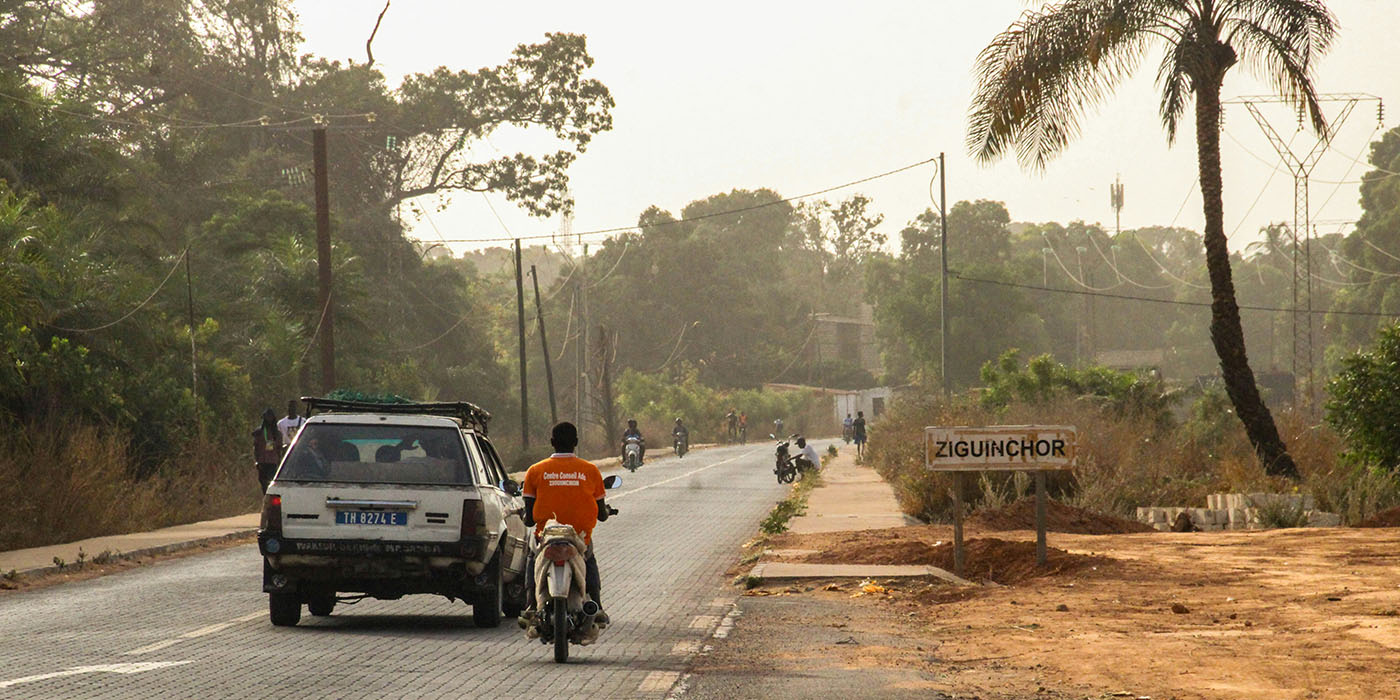
Getting around in Senegal means immersing yourself in the country’s daily life. For residents, transportation is part of the routine—from crowded buses and taxis where you haggle over the fare to “seven-seaters” that you hop into on a whim. For an international traveler, it’s often the great unknown when booking a rental or planning an itinerary, especially with the arrival of new infrastructure like the TER or the future BRT in Dakar. Understanding the differences in usage, vehicle types, and price ranges—whether on the road or in the air—is essential for planning your trip with peace of mind and choosing the right transportation option based on your needs.
A transportation landscape in full transition
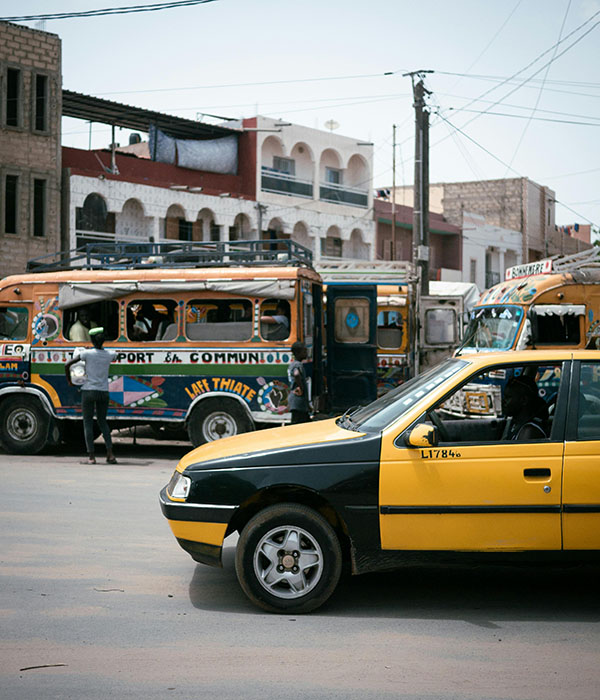
Senegal is currently experiencing a coexistence between traditional transport systems and modern networks. On one side, there are classic taxis, city buses, car rapides—mostly concentrated in Dakar—and Ndiaga Ndiaye minibus trucks, which handle a large share of everyday public transport in the capital. The famous yellow-and-blue car rapides remain iconic in Dakar, but they are mainly used for urban and suburban travel within the Dakar region, not across the whole country. In addition, there are “sept-place” shared cars that provide road connections between major cities, as well as minibuses and long-distance coaches.
On the other side, Dakar is undergoing transformation with the Regional Express Train (TER), which currently connects the city to Diamniadio in its first operational phase, while the extension toward Blaise Diagne Airport (AIBD) is under construction and aims to begin commercial operations in the first half of 2026. In other words, the direct TER Diamniadio–AIBD shuttle has been announced but is not yet fully operational, even though Phase 2 works are progressing. The BRT (Bus Rapid Transit) further complements this system, offering modern buses running on dedicated lanes along the city center–Guédiawaye corridor. This next-generation infrastructure is designed to bypass Dakar’s chronic traffic congestion.
Another notable development is the rise of ride-hailing services such as Yango, which have become well established in Dakar’s urban transport ecosystem. These services operate via mobile apps, offering an estimated fare before the trip, slightly more expensive than the most local transport options but far more predictable for users unfamiliar with negotiation or local pricing norms.
How do residents get around?
Residents in major cities rely primarily on public transportation for their daily mobility. In Dakar, urban buses, car rapides, and Ndiaga Ndiaye minibuses remain the backbone of transport. These options are extremely affordable, but they are often overcrowded, sometimes slow, and not very comfortable. A city bus ride typically costs less than 1 euro, or under about 650 FCFA / 1.10 USD, which explains their widespread use for daily commuting.
Taxis complement this system. In Dakar, they usually operate without meters, and fares are negotiated before getting in. In practice, prices are often around 1 to 2 euros per kilometer, or approximately 650 to 1,300 FCFA / 1.10 to 2.10 USD, although the perceived cost varies depending on time of day, traffic conditions, and bargaining ability. Residents quickly develop a sense of “normal” fares between neighborhoods and use these references when negotiating with drivers.
Between cities, “sept-place” shared cars play a key role. These are collective vehicles that depart from bus stations only once all seats are filled, which can involve waiting time, but they offer affordable connections to cities such as Saint-Louis, Kaolack, Mbour, Tambacounda, or Ziguinchor. Intercity trips typically cost a few thousand CFA francs, equivalent to several euros or dollars for journeys of several hundred kilometers. Minibuses and large coaches also provide intercity transport, though with longer travel times and frequent stops.
The TER (Regional Express Train), on its first Dakar–Diamniadio phase, has significantly changed commuting for many workers and students living in the suburbs. The trains are air-conditioned, punctual, and offer much shorter travel times than road transport, at a higher cost than buses but still affordable for a growing share of the urban population. The planned extension toward the airport, still under finalization, is expected to eventually connect Dakar more directly to AIBD, but for now residents rely on taxis, road shuttles, or private vehicles to travel between Diamniadio and the airport.
For residents, the main advantage of the system is the very low cost of many transport options and the density of the network, especially in the capital. Its main drawbacks are comfort, road safety—which is a recurring concern—and travel times, which can easily turn into long hours spent in traffic or waiting at stations.
How do international travelers get around?
For foreign visitors, the first step is usually the international flight. Dakar is served by several airlines, including Air Senegal, as well as major European and African carriers via Blaise Diagne Airport (DSS). Ticket prices vary significantly depending on the season, airline, and how early the booking is made, but round-trip fares between Europe and Dakar typically range from 300 to 800 euros, or about 196,000 to 524,000 FCFA / 315 to 840 USD for economy class flights.
For example, Air Senegal sometimes offers Paris–Dakar round trips starting around 650–770 euros, or roughly 430,000 to 510,000 FCFA / 690 to 820 USD, depending on travel dates. Other routes, such as Casablanca–Dakar or certain West Africa–Dakar connections, are generally priced around 330,000 to 375,000 FCFA round trip, or about 500 to 570 euros / 530 to 600 USD.
Once at AIBD airport, travelers have several options to reach Dakar or the Petite Côte: official taxis, private shuttles, ride-hailing services such as Yango, or transport arranged by hotels and residences. A taxi transfer to Dakar typically costs between 15,000 and 30,000 FCFA, or about 23 to 46 euros / 24 to 50 USD, depending on the destination and negotiation.
Private shuttles or hotel-arranged transfers are usually priced in a similar range, with an added premium for comfort and direct pickup at the terminal. The TER (Regional Express Train) already connects Dakar to Diamniadio, but the full link to the airport is not yet fully operational for commercial use. For now, it should not be considered a reliable direct shuttle between AIBD and the city center.
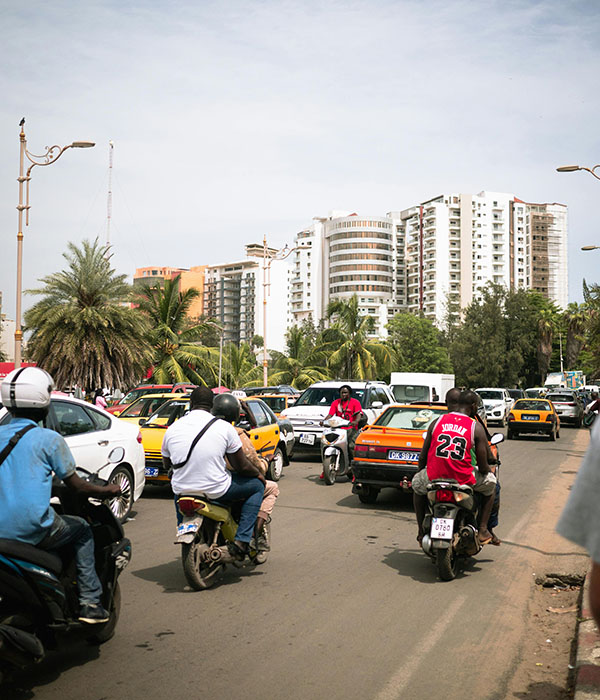
In Dakar, visitors mainly use taxis and ride-hailing services. Yango, which is widely available, allows users to book a vehicle through an app and see an estimated fare before the trip, which is reassuring for travelers unfamiliar with local practices. Taxis remain everywhere and easy to find, provided you check the condition of the vehicle, agree on the fare calmly, and—if possible—get a general idea of the expected price range beforehand.
For travel between regions, international travelers can choose between overland transport and domestic flights. On the ground, they can use the same “sept-place” shared cars and intercity buses as residents, a very affordable option but sometimes exhausting, with long travel times and varying comfort levels. Those who prioritize time and comfort are more likely to choose private transfers through agencies, hotels, or transport companies, with prices that can approach European levels for long-distance journeys.
By air, domestic flights play a key role in reaching remote regions such as Casamance. The Dakar–Ziguinchor route, for example, is operated by Air Senegal and other carriers, with round-trip fares often ranging from 50 to 120 euros depending on the season, or approximately 33,000 to 79,000 FCFA / 53 to 130 USD based on the lowest available fares. Comparison platforms show direct round trips starting from around 56 euros, or roughly 37,000 FCFA / 59 USD, although prices fluctuate depending on demand and travel periods.
Other domestic or regional routes from Dakar, operated by Air Senegal, show similar price ranges, generally between 40,000 and 150,000 FCFA for a round trip in economy class, or about 60 to 230 euros / 63 to 240 USD, depending on destination and travel date.
International travelers therefore choose between very cheap local transport options—just a few euros or dollars for long distances, but at the cost of fatigue—and more comfortable or air-based options, which significantly reduce travel time but come at a higher price.
Practical tips depending on your profile
For residents or expatriates, the main goal is to optimize daily mobility: knowing routes and schedules well, identifying reliable bus stations for “sept-place” shared cars, and taking advantage of the Dakar–Diamniadio TER, which already offers a useful alternative to road transport on this heavily congested corridor. The use of *car rapides* and *Ndiaga Ndiaye* buses in Dakar remains essential for the tightest budgets, although many users increasingly prefer newer buses, ride-hailing services, or taxis for reasons of comfort and safety.
For international travelers, anticipation is key. It is best to plan airport transfers in advance, either by booking a shuttle through your accommodation or by checking estimated price ranges for a taxi or ride-hailing service like Yango from AIBD to Dakar or the Petite Côte. Once settled, alternating between traditional taxis and Yango helps maintain flexibility while reducing price surprises, especially for evening trips or rides to less familiar areas.
For long-distance travel, a mixed approach is often ideal: local transport (buses, sept-place cars) for some daytime and high-traffic segments, and private transfers or domestic flights for more sensitive legs of the journey, particularly toward Casamance or the far eastern regions of the country. It is also worth checking ferry schedules and fares for Ziguinchor, which can be an interesting alternative to flying or road travel at an intermediate cost.
Finally, it is important to remember that every saving on transport comes at the cost of time and fatigue. Allocating a few dozen euros or dollars—several tens of thousands of CFA francs—to a private transfer or a domestic flight can be worthwhile to fully enjoy a short stay, especially when renting a villa, apartment, or room in a remote area.
FAQ – Transportation in Senegal: residents and international travelers
How can tourists easily get around Dakar?
Most visitors combine traditional taxis, ride-hailing services such as Yango, and, depending on their needs, the TER on the Dakar–Diamniadio section or the future BRT buses, while booking a shuttle or taxi in advance for airport transfers if necessary.
Are local transport options like “car rapides” or “sept-place” shared cars safe for foreigners?
They are widely used by residents and very affordable, but comfort and road safety can vary. It is recommended to avoid night travel and to prefer reputable companies or well-known bus stations.
Does the TER shuttle go directly to the airport?
For now, the TER is fully operational between Dakar and Diamniadio, while Phase 2 toward AIBD is being finalized, with commercial operation expected in the first half of 2026. However, it is not yet fully established as a daily airport shuttle service.
How much does an international flight to Dakar cost?
From Europe, a round-trip economy ticket generally costs between 300 and 800 euros, or about 196,000 to 524,000 FCFA / 315 to 840 USD, with some Air Senegal or other airline routes priced around 650–770 euros depending on dates.
What is the price of a domestic flight Dakar–Ziguinchor?
Direct round trips are available from around 50–120 euros, or 33,000 to 79,000 FCFA / 53 to 130 USD, depending on the season, airline, and booking time.
Can you use ride-hailing apps in Senegal?
Yes, services such as Yango are available in Dakar and offer fixed-price rides shown in advance, which is convenient for travelers who prefer to avoid negotiation and want a more standardized level of comfort.